
Over the weekend, I found myself visiting the Lindt store in Adelaide and bought two blocks of their Dubai Style Chocolate. At A$20 a block, it is pricey compared to other Lindt blocks with similarly tasty fillings. Four years after its inception, Dubai chocolate is still going on strong all over the world, which inspires me to write about the phenomenon for this month.
I’ve given my criticism against brands chasing fleeting phenomena previously. However, I think there’s more to learn from this confectionery craze, rather than dismissing its existence.
Differentiation plays a part, but it cannot stand on its own
The creation started in 2021, when Sarah Hamouda and Nouel Omamalin invented a mixture of kadayif (or kataifi) and pistachio-tahini cream for their chocolate blocks. They have a business called Fix Dessert Chocolatier in Dubai. The product suddenly exploded over TikTok in 2024, created an obsession for this chocolate creation. It’s certainly a differentiated product, compared to other chocolate blocks. Now, have you ever tried the original Dubai chocolate?
Probably not – but there’s a good chance that you’ve tried its other dupes or knock-offs. My first Dubai chocolate was ‘ChoKunafa’ bought from the airport in Doha.
This is the major limitation with differentiation. For it to be entirely effective, it needs to be under tight protection, and supported by the might of the company behind the brand. It’s difficult and potentially costly. There are many features, flavours, and scents created and produced by small brands or artisan producers. Once something resonates strongly with consumers, there is nothing that would stop a big brand either to release their own version – or simply acquire the minnow brand. This happened time and time again across many categories from beer to gadgets.
Brands cannot grow simply by relying on it being differentiated. They need to be known by consumers – by their name and their distinctive assets, rather than merely for their products, because products can be copied or competed against. Another crucial reminder that brands need to build their mental availability and physical availability – easy to come to mind when a category needs occur, and easy to find when consumers are ready to purchase. Remember the time when we ooh-ed and aah-ed, seeing how we could pinch on our iPhone screen to zoom in and out? Now, we associate the feature with just any smartphone brand. Or what happened after Nespresso let their coffee pods patent lapse?
Brand size matters as a signifier of quality
Coming back to the original Dubai chocolate, it is hampered from the lack of mental availability and physical availability. If I ask somebody on the street whether they know which brand launched the Dubai chocolate first, I doubt anybody would know.
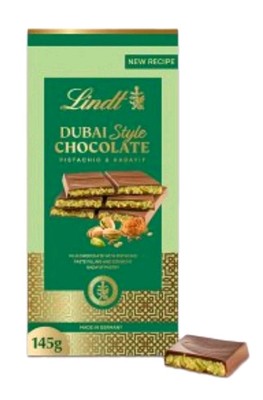
Now comes the interesting thing. There are many dupes and knock-offs out there but I am somehow reluctant to buy random ones. As a heavy category buyer for chocolate, I enjoy good chocolate. I don’t want to buy poor quality chocolate from an unknown brand, just because it has pistachio + kadayif filling. I recently went to the Royal Adelaide Show (an annual agricultural + sideshow fair here in Adelaide) where I found stalls selling their own versions of Dubai chocolate for A$30. I wasn’t interested. I was skeptical on how the chocolate would taste. On the other hand, I was eager to purchase Lindt’s Dubai Style Chocolate because I know Lindt and the quality of their chocolate. I know Godiva as well, and I’d also buy their Dubai Style chocolate if I could find it easily.
This is also the case with features and functionalities. Imagine, if a small unknown brand offers a functionality, feature, or flavour that you like. Now, which one would you buy, if a brand you’ know’re familiar with offers something similar. There are research papers that show that brands are often used as shortcuts for quality in consumers’ mind. Thus, it’s easy to imagine if massive brands that consumers are very familiar with – like Cadbury, KitKat, or Hershey’s – flex their muscles and introduce their own Dubai style variants – or M&M offering variants with crunchy pistachio and kadayif filling.
This is why size matters in Marketing.
Offering premiumised products can help further growth
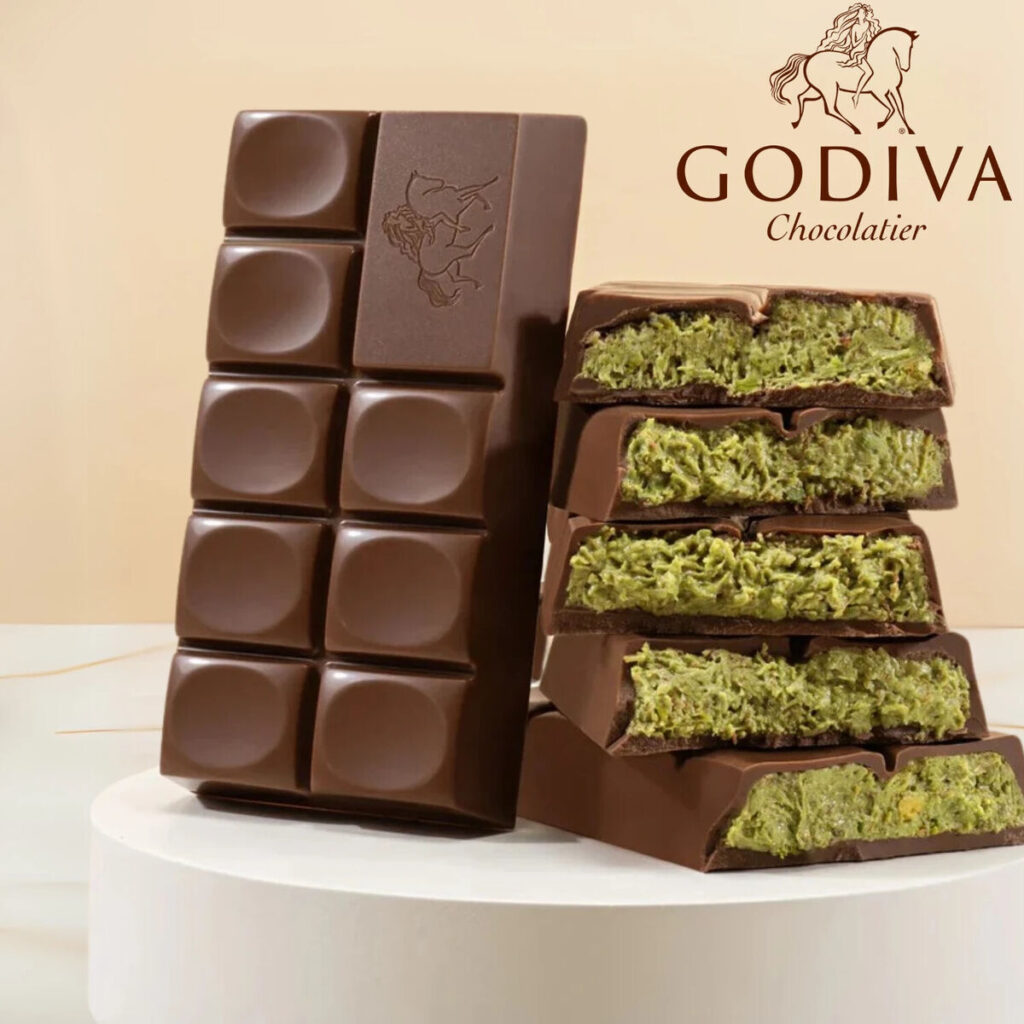
A 145g Dubai style chocolate bar from Lindt costs A$20 in Australia, which translates to 14¢ per gram. Now, a 180g Dubai style Godiva chocolate block would set you back for $A34.90, which equates to 19¢ per gram. Why would consumers buy such expensive chocolate when they can enjoy other beautiful blocks of Lindt chocolate for A$8.50 (100g = 8.5¢/gram)? A 90g milk chocolate block from Godiva would cost you A$9.90 (11¢/gram). Or maybe you prefer a block of Cadbury Dairy Milk Fruit and Nut for A$3.50 (110g = 3.2¢/gram)?
This is where we appreciate that brands can still grow in categories with high penetration. One of the strategies is to increase the value per volume, which I have illustrates through Lindt’s Dubai Style chocolate block. It doesn’t mean that brands can simply offer a premiumised product or variant without understanding the fundamental Laws of Growth. We have seen some examples of failures where brands are fixated on premiumisation and fail to keep the motor running by focusing on brand penetration. The introduction of premiumised products indeed may not appeal to the non-category buyers and the light buyers, compared to the heavy category buyers who are often attracted by new products and innovations. For the light category buyers, the hero SKUs remain important, as these are the products they seek when they want to buy – not the Dubai Style chocolate blocks. These hero SKUs still need to be supported.

Our research in category growth, innovation, product portfolio management, and how they are all interconnected with the laws of growth is progressing at the Ehrenberg-Bass Institute. Get in touch with us if you are curious or if you want to know how you can support the Institute’s not-for-profit research work! It’s one of the things that I enjoy when I come to work. It’s like Charlie enjoying his Everlasting Gobstopper from Willy Wonka – there are always more flavours and colours to enjoy, when we expand the boundaries of marketing science.