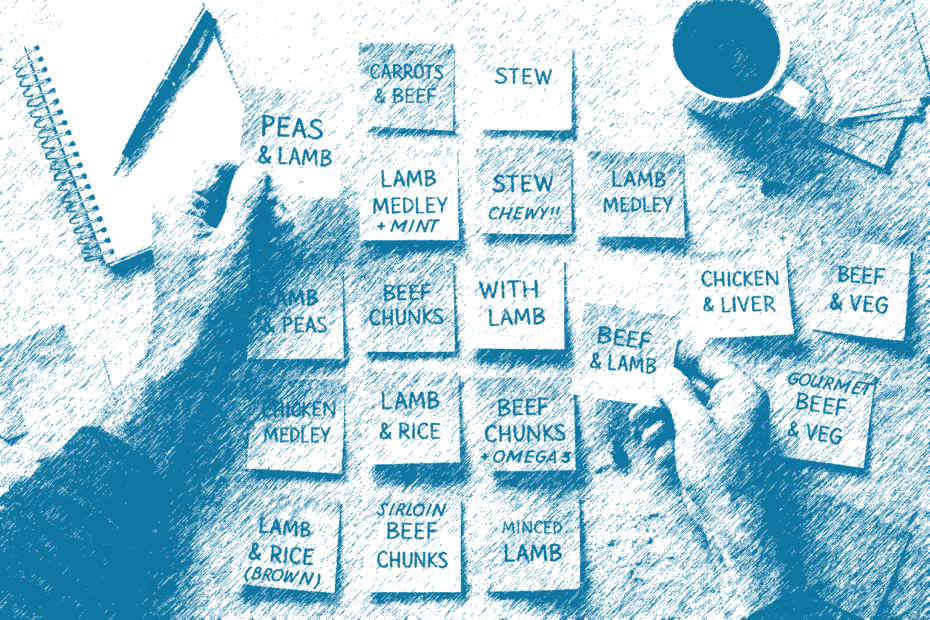
My research in product portfolio management began during my PhD. I worked with a panel dataset that contained all the SKUs (stock-keeping units) for pet food in a particular market.
Unfortunately, the dataset did not include a dedicated variable for flavour. So, in my zeal to do things properly, I worked my way through the tens of thousands of SKUs, manually coding the main flavours and variations to standardise them.
This was years before AI automation could begin with sort of task.
Coding the dry pet food was easy. But it was a much tougher gig standardising flavours for wet dog and wet cat food based only on the product descriptions. From “a medley of lamb, carrots, and peas” to “beef chunks with carrots and peas, with a hint of lamb”.
Flowery descriptions for our illiterate furry companions.
We also see this across many other categories – potato chips with flavours that try to outdo each other: “Hot Chili”, “Extra Hot”, “Hot Barbeque Wings”, “Blazing Jalapeño”, … . Essentially, a variations of the same theme. Across categories, we often see the same flavour combinations appear again and again, rearranged with slightly different wording or fancy descriptors, sometimes even from the same brand.
Many industry reports mention that a typical supermarket carries around 30,000 products. Product proliferation is understandable when manufacturers see opportunities in frequently purchased categories. That’s why we see endless chocolate bar variants or dozens of scent variations for shower gels. But it raises an important question:
So, does a brand really need many variants to grow?
Two factors matter when thinking about product portfolios: the state of the category and the size of the brand. Both are well established considerations in the research from the Ehrenberg-Bass Institute.
The State of the Category
First, how entrenched is the category in the market? What is the category penetration? What is the likely growth trajectory?
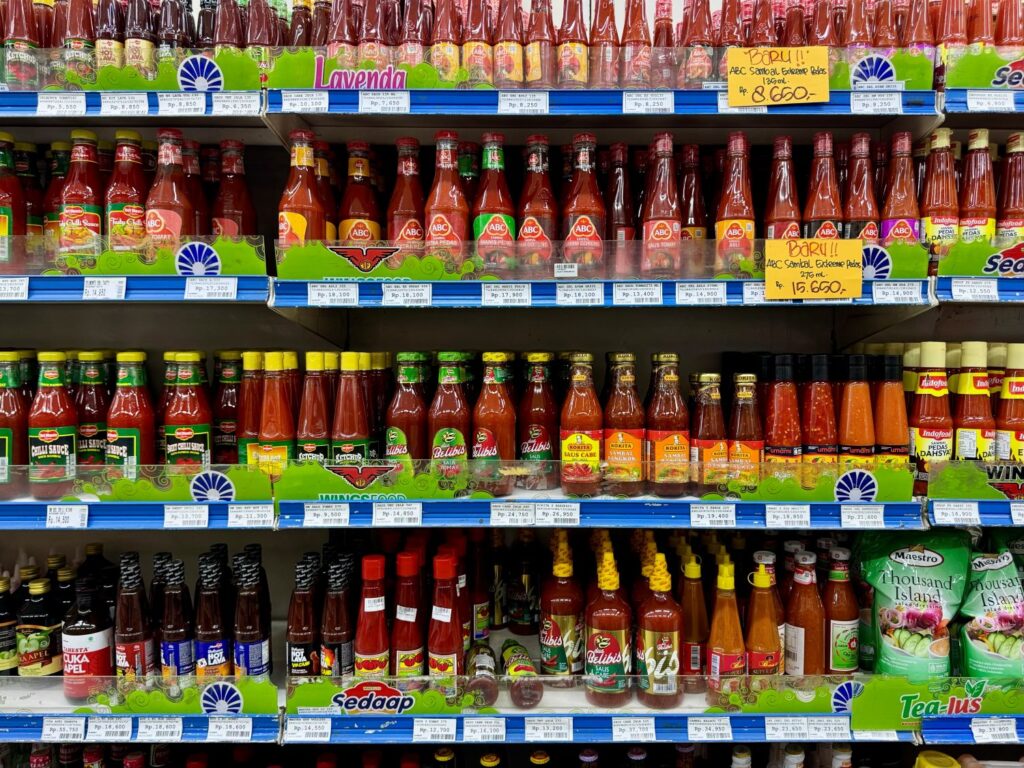
Offering many hot hot sauce variants in markets like Indonesia or Mexico makes sense. But it may be wasteful to offer a wide range in markets such as Germany or Australia, where other sauces are more popular. Similarly, you would not expect to find a large variety of cheeses in a mainstream supermarket in Thailand or Malaysia, compared with supermarkets in France or the Netherlands.
The depth of variety in stores often reflects how embedded the category is in a particular market. For example, when I recently visited Türkiye, I noticed far more varieties of lokum (Turkish delights) than what we typically find in Australia.
The Size of the Brand
The category lens must be moderated by market reality: how big is the brand?
Research at the Ehrenberg-Bass Institute shows that bigger brands tend to offer more products in the portfolio compared to smaller brands. However, the causality should not be confused. Bigger brands are not big because they have many variants. Rather, they can support more variants because they already have stronger mental availability and physical availability.
For small producers, offering a wide range can therefore be futile. If a brand is only available at a local farmers’ market or within a restricted geographic area, the probability that category buyers will purchase the -nth variant of that brand is extremely small.
Buyers are far more likely to encounter — and buy — variants from larger brands, as they are more widely available.

Here’s an old ad from Aldi in Australia from 2017 that reflects the seemingly silly product proliferation:
Managing product portfolios therefore requires looking through both the category and the brand lenses, grounded in sound marketing science principles. Without these perspectives, firms risk expanding — or trimming — product offering based on trends, intuition, or misleading business advice.