
Expanding a brand into a different category is a viable business temptation. The promise of unlocking further growth in a different category presents a new exciting challenge. I read an article recently which reports McDonald’s ambition to also get a chunk out of the chicken meal and drinks’ categories in Quick Service Restaurant.
I sometimes get this question when I speak to various marketing professionals. There are different possibilities why this is considered. The brand may already occupy a dominant position in the market, and thus expanding to a different category presents an exciting challenge for the company and for the marketing practitioners. Another possibility is the prospect of the brand occupying multiple categories and growing in parallel. The latter is risky – we can all probably agree. But, what about the earlier case? For a brand that is already a market leader in one category, surely this is easier?
Let’s unpack this.
We’re already big in our home category. Surely, we will be big in the new category.
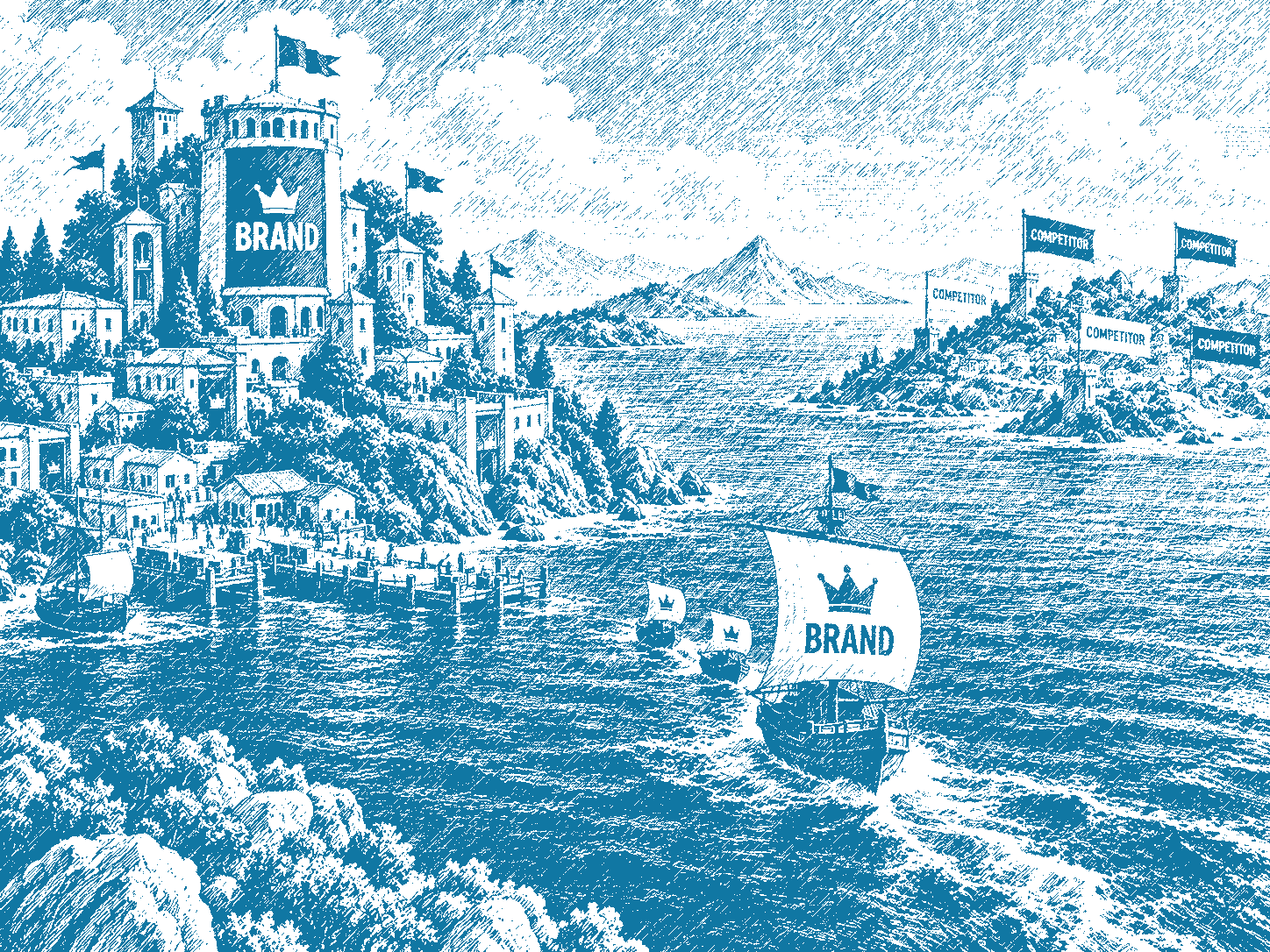
One of the computer games I play is Sid Meier’s Civilization. My favourite strategy is to play in an archipelago – whilst developing my home island into a strong nation, I would send my scout and sail across to discover more lands. I would then send my settler units and expand my territory. This tactic gets pretty complex. Not only it costs more to develop a land further away from my home island, I will also have to deal with other tribes that are dominant near my far-flung territories.
This is also the reality with growing brands into other categories. Many marketing practitioners assume that because their brand has a large customer base with relatively higher loyalty in its home category, these advantages will automatically transfer into the new category. However, the law of Double Jeopardy tells us that bigger brands generally have more buyers who are slightly more loyal, while smaller brands have fewer buyers who are slightly less loyal. The problem is that the brand’s position in the new category may be very different.
Consider a chocolate brand who is dominant in the confectionery aisle. If they want to extend their dominance into ice cream, they will have to compete with established competitors, like Ben & Jerry’s and Häagen-Dazs. Compared to these big brands, the newcomer would be a tiny brand upon the point of entrance.
I’m not saying that they cannot succeed in this new category.
They can become a big brand in the new category too, but it would need a lot of investment, resources, and commitment in the new category. Just like my Civilization games, it will get complex and require dedicated resources. The flag may be the same, but the territory, competitors, and resources required to succeed are entirely different.
What about ‘halo’ effects? Surely it counts for something …
The belief is that if the brand is big in one category, the perceptions, thoughts, and opinions people have will also transfer easily into the new category.
This assumes that consumers are aware of the existing perceptions or positioning in the home category. Despite substantial marketing investment, many consumers pay little attention to brand messaging, particularly when they aren’t buyers of the original category. Consider these questions:
- Do potential buyers recognise the brand in the new category?
- Do consumers think of the brand in the buying situations associated in the new category?
- Can consumers readily find and purchase the brand in the places and situations where they buy from the new category?
The first may provide an advantage. The second and the third are still substantial tasks. Even with all sorts of marketing strategies and tactics, many consumers are just oblivious to these all sorts of messaging – especially if they are not buyers of the home category in the first place.

As an example, Dyson’s expansion from vacuum cleaners into haircare demonstrates that successful category expansion is possible. Its subsequent venture into headphones, however, illustrates that recognition and engineering credentials alone do not guarantee whether a brand can establish its presence in another category. Some brands that manage to expand into new categories may end up ‘existing’ rather than growing, without clear long-term commitment and strategy.
In McDonald’s case, the expansion is somewhat different. Chicken meals and beverages already sit within the broader Quick Service Restaurant market. The challenge is therefore less about entering an entirely unfamiliar category and more about becoming a stronger competitor in particular buying occasions. McDonald’s may have strong mental availability for burgers, but that doesn’t necessarily mean it comes to mind as readily when they want fried chicken or a speciality beverage.
It’s not my intention to dissuade organisations or marketing professionals from expanding their brand into a different category. However, there is a need for pragmatism and the need to return to the Laws of Growth to realise that brand expansion into a new category would require building the brand’s mental availability and physical availability. A brand doesn’t carry its market share into another category. It may bring familiarity, distinctive assets, distribution relationships, and considerable resources, but these advantages don’t automatically translate into mental and physical availability in the new category.
There is nothing inherently wrong with wanting to conquer new territories. But organisations need to recognise that their brand’s success in one category doesn’t grant them an automatic foothold in another. The Laws of Growth don’t cease to apply simply because a familiar name appears on the packaging. Expansion is possible. Growth still needs to be earned.